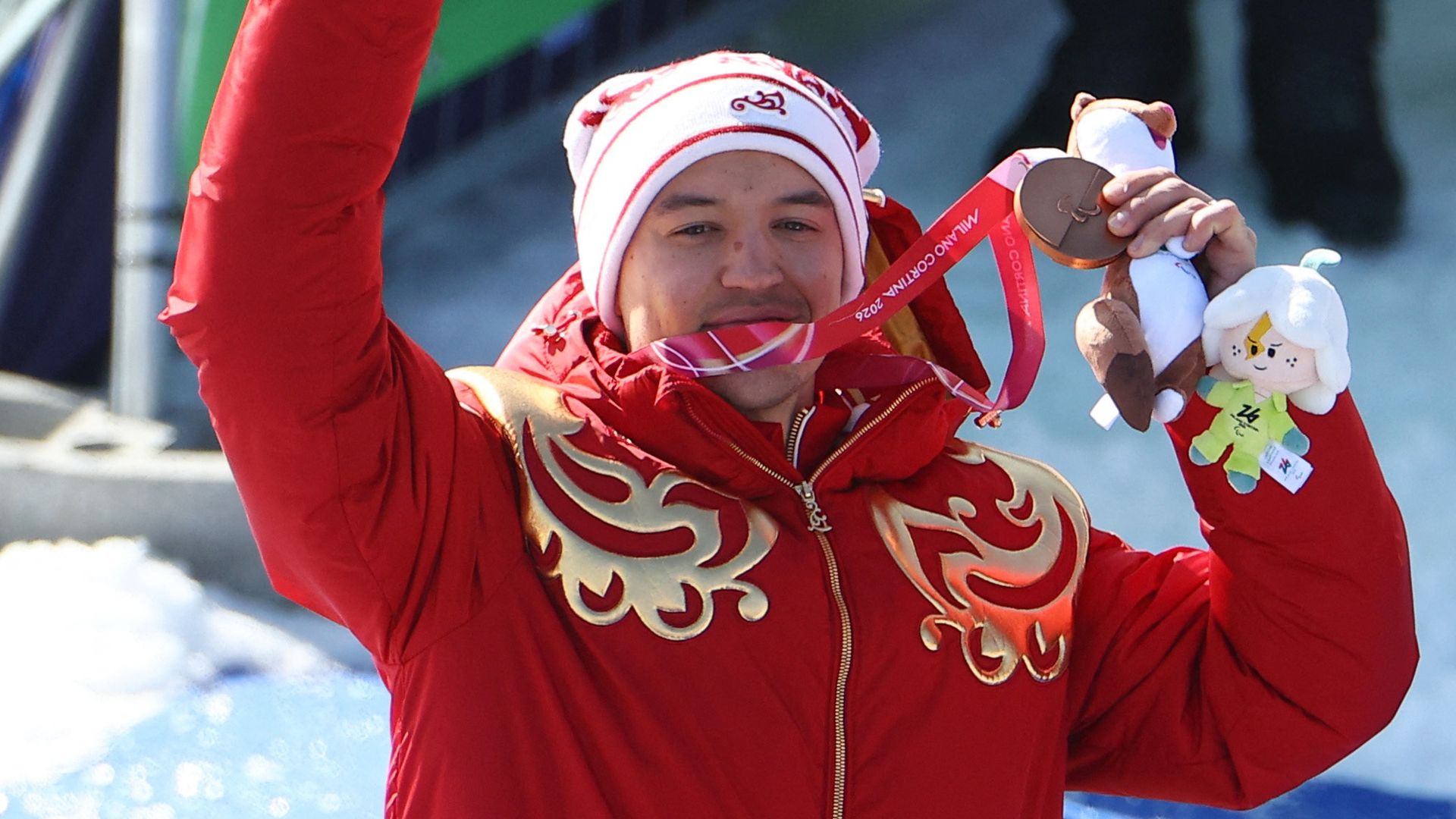
Russia Returns to Paralympic Podium After Decade-Long Exile
Russian athletes have won their first Paralympic medals under their own national flag since 2014, claiming two bronze medals at the 2026 Winter Paralympic Games in Milan-Cortina, Italy, in a moment that signals a cautious but contested reintegration of Russia into elite international sport.
Para alpine skiers Varvara Voronchikhina and Aleksei Bugaev each took bronze in the women's and men's downhill standing competitions respectively on Saturday, sharing podiums with athletes from Sweden, France, Switzerland, and other nations. Images of Russian athletes on the podium have been described as a significant milestone in the country's long road back from sporting isolation.
A Decade of Exclusion
Russia's exclusion from major international sporting competitions stretches back more than a decade. The International Olympic Committee banned Russia following accusations of widespread, state-sponsored doping at its home Sochi Winter Games in 2014. The country was suspended again after athletes appeared to promote Russia's war in Ukraine by displaying the letter "Z" on uniforms and equipment during the Beijing Winter Olympics in the days immediately following the full-scale invasion of Ukraine in February 2022.
FIFA and UEFA suspended Russian national teams and club sides from all football competitions in February 2022. In subsequent Olympic and Paralympic Games, Russian athletes were permitted to compete only as neutrals, without their national flag or anthem on display.
At last month's Milan-Cortina Winter Olympics, Russian competitors again entered under neutral status. The International Paralympic Committee, however, took a different approach for the Paralympics, allowing Russia's six athletes to compete under the Russian emblem. Those athletes received wildcard entries to the Games.
Controversy and Boycott
The decision proved deeply divisive. Ukrainian officials announced they would boycott the opening ceremony on Friday in protest at Russia's participation, and a Ukrainian Olympian publicly criticised the move. The Paralympic movement, as Sky Sports noted, is no stranger to controversy in recent years, and the debate over Russian inclusion has reopened difficult questions about how sport balances political principle with competitive access.
Ukraine's response reflects wider unease among nations that view the rehabilitation of Russian sport, even at the margins, as premature given the ongoing conflict. Russian missile strikes on Ukrainian civilians have continued throughout the period during which these negotiations over sporting access have taken place.
Six Athletes, Two Medals
Despite the political backdrop, Russia's small delegation of six athletes has already made its mark on the medal table. Voronchikhina finished on the podium alongside gold medallist Ebba Aarsjoe of Sweden and silver medallist Aurelie Richard of France. Bugaev joined gold medallist Robin Cuche of Switzerland and silver medallist Arthur Bauchet of France on the men's podium.
The results are unlikely to resolve the broader argument over whether Russia's return to flagged competition is appropriate or premature. For critics, each medal won under the Russian emblem represents a normalisation of a country still engaged in an active war on European soil. For the International Paralympic Committee, the wildcard entries represent an application of its own framework for athlete participation, distinct from the approach taken by the IOC.
What is not in dispute is that Saturday's bronze medals mark the most visible symbol yet of Russia's gradual, if contested, reemergence on the international sporting stage.