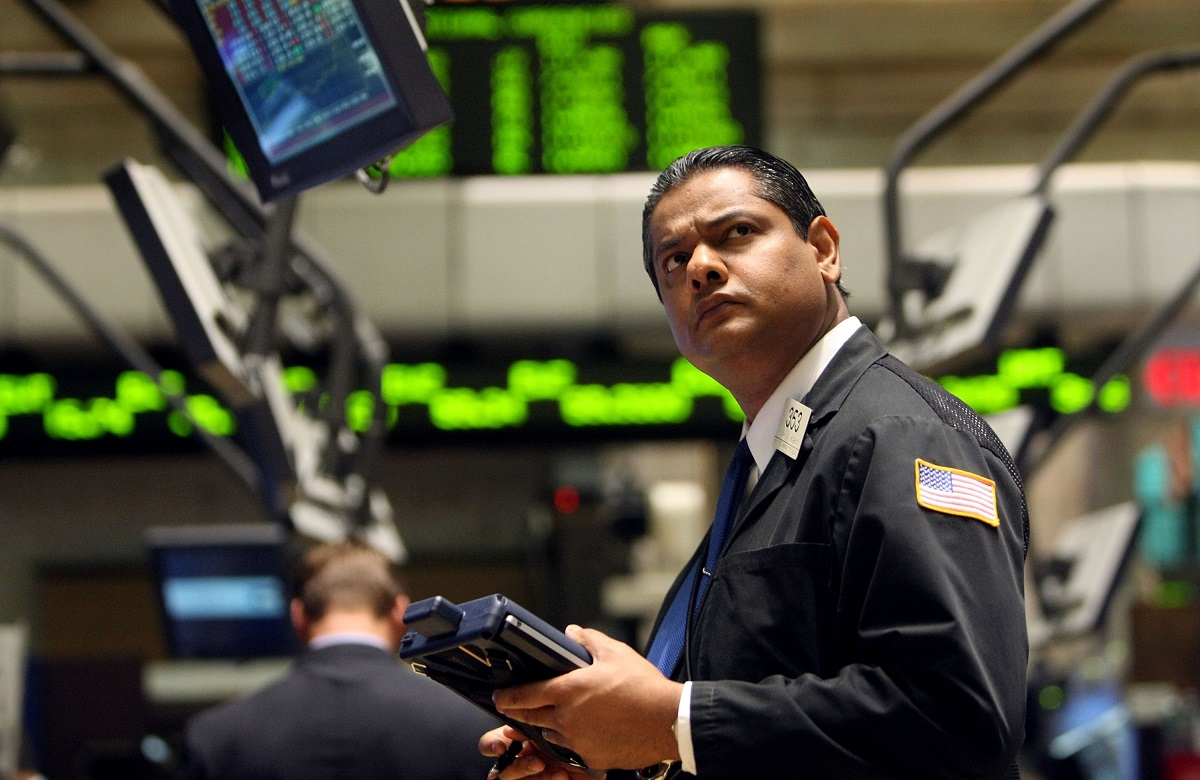
Iran War and a $7.8 Trillion Overhang Rattle Wall Street
Wall Street is grappling with two interlocking crises: a shooting war between the United States and Iran that has sent shock waves through global financial markets, and a separate but equally consequential $7.8 trillion risk that analysts argue poses an even greater structural threat to investor portfolios.
The conflict with Iran has already generated what multiple outlets are describing as a world financial panic, with equity markets experiencing heightened volatility as traders attempt to price in both the immediate costs of military engagement and the longer-term consequences for energy supplies, regional stability, and the credibility of American foreign policy.
The limits of the TACO trade
For investors who had been positioning around the assumption that President Donald Trump would eventually blink and reverse course on the conflict, a senior J.P. Morgan strategist has issued a pointed caution. According to Fortune, the strategist warned that the so-called TACO trade, a bet predicated on Trump pivoting away from confrontational policy once markets fell sufficiently, should not be relied upon in the context of the Iran war. The message from one of Wall Street's most closely watched institutions is that the playbook which guided investors through earlier bouts of policy turbulence may not apply here.
Business Insider has reported separately that analysts have tried to define precisely how deep a market selloff would need to be to, in their words, guarantee a Trump pivot on Iran. The framing itself is telling: rather than treating a policy reversal as a baseline expectation, strategists are now treating it as a threshold event requiring a specific and painful trigger.
The constraint nobody is pricing
Beyond the immediate geopolitical noise, the United States Studies Centre has described the Iran war as what could be the ultimate constraint on Trump, a phrase that implies the conflict may curtail the administration's room for manoeuvre across a range of policy areas, not merely military ones. That analysis adds a layer of complexity for investors who have been watching the White House's economic agenda closely.
Meanwhile, the Motley Fool argues that markets are underweighting a separate risk altogether. The publication points to a $7.8 trillion figure as an objectively bigger worry for Wall Street than the Iran conflict, framing the war as a compounding factor on top of a pre-existing vulnerability of enormous scale.
Sentiment and the sell-off
The convergence of these pressures has produced what commentators at the Daily Beast characterised as a spiral of war chaos triggering financial panic, with Trump at the centre of an increasingly difficult set of trade-offs between prosecuting a military campaign and managing the domestic economic fallout.
The investing platform investingLive captured the mood with a pointed observation: everything that Trump hates is what is currently happening in markets. It is a formulation that speaks to the bind facing the administration, where the financial consequences of the conflict are running directly counter to the market conditions the president has historically treated as a political barometer.
For now, Wall Street is left navigating a landscape in which the standard heuristics for reading presidential policy have been complicated by the realities of wartime, and in which a multi-trillion-dollar overhang looms in the background, largely unresolved.

